Hi, I'm Matt
I'm a Software Engineering Manager based in Bristol & London in the UK. I thrive in Engineering organisations at the intersection of technology, people, and process.
Prior to Engineering leadership, I worked for more than ten years as a backend contributor, most significantly within the Python ecosystem, but at times I have worked full-stack and even had a brief stint as a mobile Engineer. I have built software for a range of different industries, including finance, broadcasting, transport, and fashion.
Yes, the background of this page is the live-scrolling HTTP logs of this very server – it was a fun project to put together!


What is this page?
The background to this page shows the constantly-streaming server logs of the web server which serves it. The logs are streamed directly from nginx over a web socket to all connected clients. Your requests will also be highlighted in a dark-green colour.
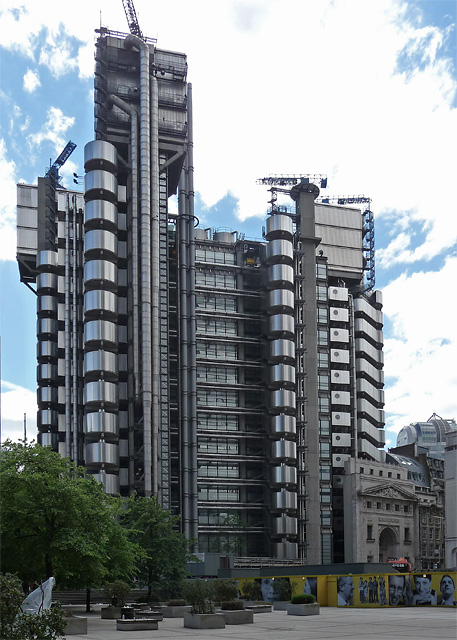
Why? well, I think it looks quite cool. The idea came about when I was reading about Bowellist architecture, where the "guts" of a building (ducts, piping, lifts) are placed on the exterior of a building in order to maximise space on the inside. I wondered: what would a "bowellist" technical architecture look like? This led to a few ideas, but the ultimate implementation is the page you're looking at, which I think also captures the interest of any technically-minded folk who land on this page.
This was a particularly fun piece to put together when in normal software engineering instances, we work hard to _never_ expose "inside data" to the outside, and our systems are specifically designed to make this difficult. Building "against the grain" here produced some fun challenges.
This also gave me an opportunity to try django-channels, Django's websocket-streaming tooling. I also made use of Python, Django, and Redis. The frontend was generated by Lovable, which takes some bullying to get to generate static code instead of React/TypeScript components.
Manager README, Matt Jackson
Last updated August 2026
I first came across "Manager READMEs" and "Personal User Manuals" in a previous role at Tarabut. I think they are a great way to 'soft introduce' managers to new teams and individuals, giving an opportunity for teams to build familiarity with their new manager from a comfortable distance.
My Background
Before moving into management, I operated for more than ten years as a Backend Engineer, mostly with the Python stack – though I also dabbled in frontend/infra, and even had a brief stint in mobile native development. I've worked in broadcasting, fashion, transport and most recently fintech. I’ve spent most of my career in tech startups – I have found there’s no substitute for the energy and urgency of these environments. The creativity and dynamism that comes from teams working under these conditions is genuinely exciting – and even quite addictive as a way to work. Building great relationships with colleagues is the fantastic icing on the cake along the way.
My recent roles have been in "senior EM", or "Director" level roles, but given the backdrop of huge industrial change as a result of LLMs and generative AI, I’ve taken the decision to put myself ‘closer to the ground’ in the world of Software Engineering in my new role as an Engineering Manager.
My approach
How I Work
My core working hours are usually 9am–5:30pm, though I will work on top of those hours when needed to push something important over the line, or when I just really feel an urge to "get this done". Outside of meetings, you can expect me to be responsive in my normal hours. I am willing to be contacted out-of-hours in emergencies – please use this responsibly! I will not generally message you outside of working hours unless we have prior agreement, or there’s an urgent matter that needs addressing.
The best way to contact me is usually via Slack! I aim to respond to Slack messages which need a response within an hour, and emails within a day.
Living in Bristol, on days when I am travelling to the London office I may be less responsive during the commute and may need to opt out of meetings taking place in the first hour of the day. I’ll always block this out in my calendar when it applies.
Feedback
Typical manager line (but it’s true): I’m a big believer in continuous feedback as a driver for improvement. Sometimes feedback can feel scary and can elicit a defensive response. But fundamentally, feedback is here to help us improve. I aim to create conditions where giving and receiving feedback feels safe, easy, and rewarding.
Fundamentally, feedback is also two way. So if you ever have any feedback for me, I want to hear it! And I promise I will hear it constructively. The best place to give me feedback is typically in 1:1s, on that note...
1:1s (One-to-ones)
I consider 1:1s to be one of the most important meetings in my calendar – they are my opportunity to really "touch grass" in terms of how individuals are doing, where concerns are, and what problems could be on the horizon. In remote environments, it’s also the best way for us to get to know each other well, which will pay itself back to us repeatedly in our day-to-day work.
I’ll hold 1:1s with my direct reports, as well as stakeholders to the teams I support. With report 1:1s, I aim for the agenda to be driven by the report. This is your space to bring me your concerns, ideas, and thoughts: ask me anything! I also aim for 1:1s to have space for two-way feedback. At times I will directly ask you for feedback on how I am doing, but even if I don’t ask, know that feedback back to me is always welcome.
I’m aware that different reports will be comfortable with different frequencies of 1:1s, and this is something we’ll agree on in our first conversations. In really busy periods, I may need to cut back on 1:1s. When this happens, you can expect me to communicate this clearly, and I’ll seek to restore ‘normal service’ as soon as I can.
Process and Software Development
I’m an advocate of people over process, and encourage the teams I support to continually revise our working process to help us ship quickly, reliably and safely.
In the past, I’ve had success working in Scrum-like and Kanban-like formations. But I believe that teams are as unique as the people that compose them, and there’s no "one size fits all" process. So when I’m supporting your team, you can expect for me to advocate for continuously revising and refining our working processes together.
When things go wrong
While we always aim for things to go right, we should be well-prepared to handle the impact when things don’t go to plan.
In the event that you have bad news to bring me – please bring it sooner rather than later. This gives us both the opportunity to take the right corrective actions faster. I can also promise that I’ll be understanding even when you feel you have made a mistake. I’m a big believer in psychological safety as an enabler to a constructive engineering culture, and being at ease talking about our own mistakes is a significant part of that.
Work/life balance
I am convinced that in order to get the most from ourselves during our working lives, it’s important that we all take adequate time to recharge in between. As a manager, I’m always listening for signals of "burnout" in my teams, and encouraging team members to make good use of their annual leave allowance to mitigate. Of course, one of the best ways of encouraging sustainable working behaviours is by modelling them myself – so you can expect me to take at least two longer breaks per year, and during that time I’ll be planning to minimise my contact. Apart from a desire to "recharge my batteries", this also creates great conditions to build resilience within my teams. I don’t want any team members – myself included – to be singularly indispensable for critical operations.
Outside of work
Outside of working life I aim to spend a good amount of time with my hobbies away from a screen!
Reading – and reading fiction, specifically – is a big part of my "unwinding" process at the end of the work day. I find it a great way to set myself up for good-quality rest, which in turn supports my day-to-day work. I’ve recently been working my way through Noah Hawley’s novels – he’s best known as writer & showrunner of the Fargo TV series. I’m also a big fan of superhero fiction and have been reading comics & graphic novels as long as I can remember. Jonathan Hickman and Grant Morrison are two of my favourite superhero writers.
Fitness is a great complement to a tech career. Enjoying the world outdoors is a great counterpoint to working through problems presented on a screen. I also love an adventure, and used to do a lot of adventure cycling. These days I love to hike, cycle, and lift weights. I also recently had a great time on a week-long kayaking holiday in Sardinia.
DIY – A few years ago now I bought a house in Bristol that needed a lot of work, and have been embarking on the long process of fixing it up ever since. This was a whole new set of skills for me, and hugely out of my comfort zone. I have learned a lot along the way!
Thank you for reading – please do reach out to me if you have any comments on this introduction!